Heat Pump vs. Central Air in Southern California: Cost, Efficiency, and Climate Fit
By Alicia Air11 min read
For most Southern California homeowners, a heat pump is the better choice. It handles both heating and cooling in one system, qualifies for California and federal rebates, and performs efficiently in Orange County's mild winters. Central air costs less upfront only when a furnace already exists. Heat pumps typically deliver stronger long-term savings.
What Is the Difference Between a Heat Pump and Central Air in Southern California?
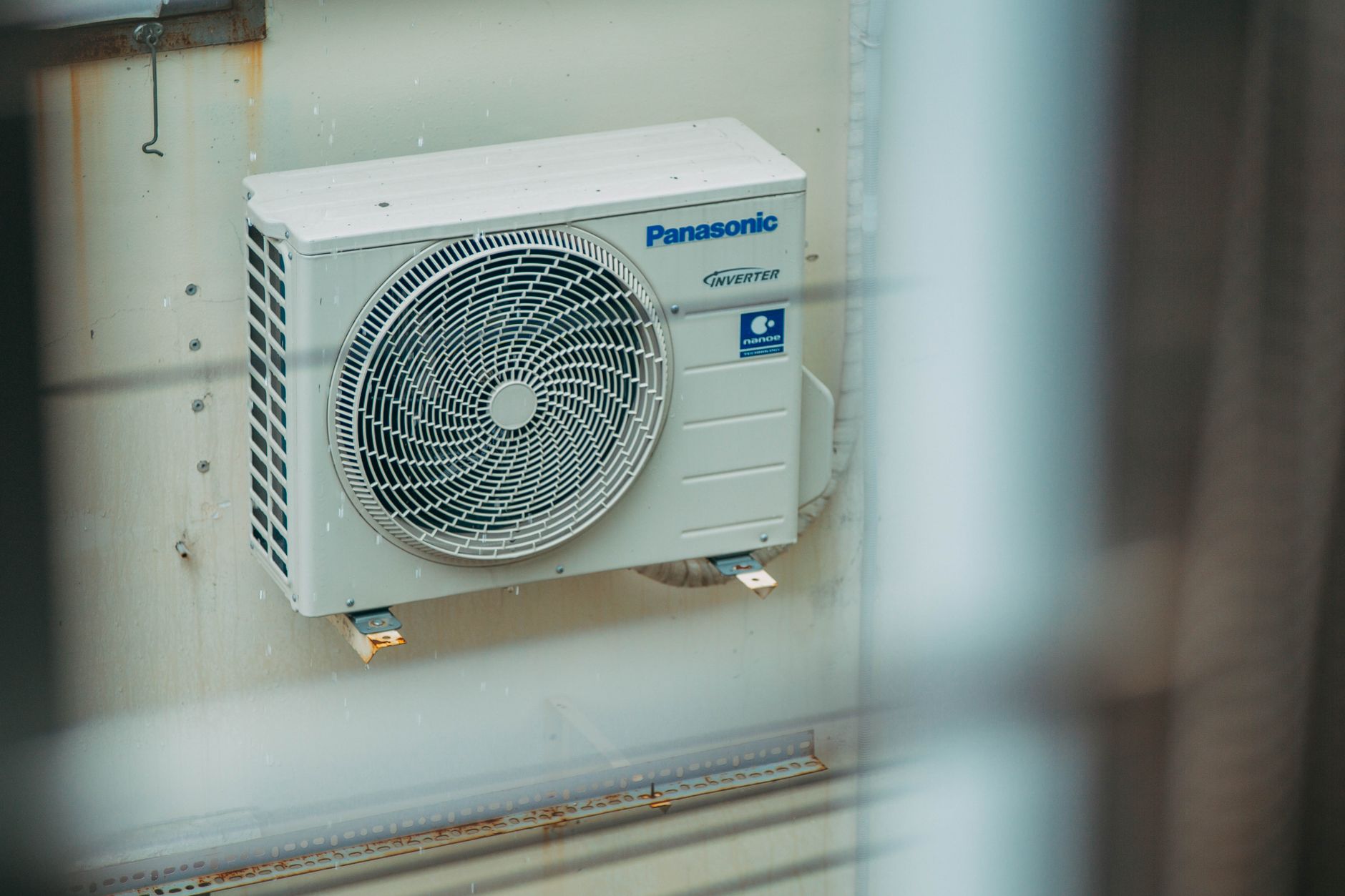
A heat pump and a central air conditioner look nearly identical from the outside. Both use an outdoor condensing unit, indoor air handler, and ductwork to condition your home. The critical difference is function. A central air system moves refrigerant in one direction, extracting heat from indoor air and expelling it outside during summer. A heat pump does the same thing in summer, but it also reverses that refrigerant flow in winter, pulling heat from outdoor air and delivering it inside. One system. Two seasons. No gas furnace required.
For Orange County homeowners in cities like Lake Forest, Mission Viejo, and Irvine, this dual function matters because California's regulatory environment is accelerating toward all-electric buildings. For example, consider a Mission Viejo homeowner whose 15-year-old central AC and gas furnace are failing simultaneously. By choosing a heat pump instead of replacing both separately, they qualify for $2,000 federal tax credit plus up to $4,000 (energy.ca.gov) HEEHRA rebate if income-qualified, cutting the net installed cost from $12,000 to potentially $6,000 or less while eliminating future SoCalGas rate increases. California's 2025 Energy Code updates are projected to save an estimated $4.8 billion in energy costs over 30 years and reduce greenhouse gas emissions by about 4 million metric tons (energy.ca.gov). Buildings currently emit 25% of the state's total greenhouse gases (energy.ca.gov), and HVAC systems are a primary target. Choosing a heat pump today positions your home on the right side of that trajectory.
How Does a Heat Pump Work Differently from Central AC?
The operational difference between a heat pump and central AC comes down to the refrigerant cycle direction. Standard central air conditioning moves refrigerant in a fixed path, absorbing indoor heat and releasing it outdoors. That is all it does. A heat pump adds a reversing valve that switches refrigerant flow direction, enabling it to extract heat energy from outdoor air even in cool weather and transfer it indoors.
This capability sounds limited by cold weather, but it is not a problem in Southern California. Orange County's average winter lows of 45 to 50 degrees Fahrenheit sit well within the optimal operating range for modern heat pumps. Most residential heat pumps maintain full efficiency down to approximately 25 to 35 degrees Fahrenheit, and advanced cold-climate models push that lower. In practice, an Orange County home in Lake Forest or Laguna Hills will rarely if ever push a heat pump close to its efficiency limits. Cold-climate heat pump models designed for sub-zero northern states are unnecessary and more expensive here. A standard air-source heat pump handles everything a Southern California home needs.
What Does California's Electrification Push Mean for Your HVAC Choice?
California's Title 24 energy code now requires new residential construction in many Orange County jurisdictions to be built all-electric, making heat pump HVAC the default rather than the exception. The 2022 Title 24 update introduced strict ventilation efficiency requirements, including fan power limits below 1W/cfm and sensible heat recovery above 60% for qualifying systems (ucop.edu). These requirements favor modern variable-speed heat pump systems over legacy gas-and-AC combinations. The policy direction is clear. Installing a heat pump now avoids future compliance costs and positions your home favorably for resale in a market that increasingly values all-electric infrastructure.
How Do Upfront and Long-Term Costs Compare for Heat Pumps vs. Central Air in Orange County?
Cost is where this decision gets nuanced, and where most online comparisons fall short. The sticker price comparison is straightforward: heat pump systems in California average $10,250 installed (fixr.com), while whole-home air-source heat pump systems nationally run $8,000 to $15,000 before incentives (budgetheating.com). For Los Angeles-area homes, costs typically run $9,000 to $18,000 depending on system size, brand, and ductwork condition (eamechanical.com). Orange County pricing generally falls within this range. The comparison against central air requires accounting for a complete system: a central AC unit paired with a gas furnace, since AC alone provides no heating.
That is the hidden cost trap. Homeowners who compare a heat pump against an AC-only quote are not making an apples-to-apples comparison. A full central air replacement that includes a new gas furnace typically exceeds the cost of a heat pump installation when both are evaluated over a 10-year window. SoCalGas rates have climbed over 40% in just twelve months, meaning gas heating costs are a moving target that trends upward. A heat pump eliminates gas heating entirely, converting that monthly variable cost into a fixed electrical load that benefits from California's time-of-use rates and potential solar pairing.
Hidden costs matter too. Electrical panel upgrades, if your home's service panel is undersized for a heat pump's electrical draw, can add $1,500 to $4,000 (energy.ca.gov) to the project. Ductwork remediation, sealing, or replacement can add similar costs if your existing ducts are leaky or undersized. These are real factors to budget for. At Alicia Air, we complete a thorough pre-installation assessment to identify panel and ductwork issues before quoting, so there are no surprises on installation day.
What Rebates and Incentives Are Available for Heat Pumps in Southern California?
The rebate landscape for heat pump installations in Orange County and the greater Southern California region is substantial, and stacking multiple incentives is possible with the right contractor guidance. The federal IRA Section 25C tax credit covers 30% of installation costs up to $2,000 for qualifying heat pump systems (energy.ca.gov). Income-qualified homeowners can access far more through the HEEHRA program: California residents with household incomes between 80 percent and 150 percent of area median income are eligible for up to a $4,000 rebate, while lower-income households can receive up to $8,000 (energy.ca.gov). Income-qualified multifamily properties can receive up to $14,000 per unit (energy.ca.gov).
In Los Angeles, LADWP customers can access up to $2,500 per ton in heat pump rebates, meaning a typical 4-ton system qualifies for $10,000 from LADWP alone, with additional stacking from SoCalGas and thermostat rebates reaching $10,215 total (eamechanical.com). No comparable federal or state rebate program exists for central AC-only installations. The incentive structure unambiguously favors heat pumps.
How Do Efficiency Ratings Compare: Heat Pumps vs. Central Air for Southern California Homes?
Efficiency ratings for both systems are measured in SEER2 (Seasonal Energy Efficiency Ratio 2) for cooling. Higher SEER2 means lower cooling cost per hour of operation. For the Southwest region, which includes all of Southern California, residential central air systems under 45,000 Btu must meet a minimum SEER2 rating of 14.3, while larger systems require at least 13.8 SEER2 (seer2.com). These are floor standards. High-efficiency units exceed them significantly.
Heat pump heating efficiency is measured separately in HSPF2 (Heating Seasonal Performance Factor 2). This metric captures something a simple efficiency percentage cannot: a heat pump does not burn fuel to create heat, it moves heat. For every unit of electricity consumed, a modern heat pump delivers 2 to 3 units of heat energy into your home. The physics do not compete. In Orange County's climate, where heating loads are modest and heating season is short, a heat pump's thermal multiplication advantage produces measurable savings over a gas furnace, particularly given rising SoCalGas rates.
Cooling performance is essentially the same as a central air conditioner in summer. This is an important and frequently misunderstood point. A heat pump and a central AC unit with the same SEER2 rating will cool your home identically. The heat pump does not sacrifice cooling performance to gain heating capability. You get equivalent summer comfort with the added benefit of efficient winter heating at no efficiency penalty.
Does Southern California's Climate Make Heat Pumps More Efficient Than in Other Regions?
Yes, meaningfully so. Heat pump efficiency is climate-dependent. In Minnesota or Maine, a heat pump must work against extreme outdoor temperature differentials in winter, reducing its coefficient of performance and requiring electric resistance backup heat strips to supplement. Orange County avoids this problem almost entirely. With winter lows averaging 45 to 50 degrees Fahrenheit in communities like Rancho Santa Margarita and Aliso Viejo, a heat pump operates in its sweet spot year-round. The efficiency advantage that makes heat pumps attractive nationally becomes an even stronger argument locally, where the climate rarely tests the system's limits. Southern California's 280-plus sunny days per year also reduce overall heating and cooling loads compared to humid coastal or inland desert climates, keeping energy costs low regardless of system type.
Heat Pump vs. Central Air: Feature-by-Feature Comparison Table
The table below covers every major decision factor for Orange County homeowners comparing a heat pump against a central air plus gas furnace combination. Use it as a reference when evaluating contractor quotes.
Results speak louder. The table above shows heat pumps winning on incentives, regulatory alignment, and total-system functionality. Central air wins only in one narrow scenario: when a relatively new, functional gas furnace with several years of service life remaining is already in place. In that case, replacing only the AC unit with a high-SEER2 central air system may offer better short-term value. That is a real scenario. But it is the exception, not the rule, for most Orange County homeowners evaluating a full system replacement.
When Does Central Air Still Make Sense in Orange County?
Central AC without a heat pump upgrade still makes sense in specific situations. If your gas furnace is three to seven years old and functioning well, replacing only the air conditioner with a high-efficiency central air unit preserves that furnace investment without writing off years of remaining service life. Rental properties where the landlord absorbs equipment costs but tenants pay utility bills may also favor the lower-upfront-cost AC option, since the landlord does not recapture gas savings. Properties with no current plans for sale or major renovation, and no exposure to California's electrification mandates, may not generate a sufficient return on the heat pump premium. These are legitimate scenarios.
Which System Should Orange County Homeowners Choose in 2026?
The verdict is clear for most situations. A heat pump is the right choice for the majority of Orange County homeowners replacing a complete HVAC system in 2026. The combination of federal tax credits, TECH Clean California rebates, HEEHRA income-qualified funding, and eliminated gas heating costs produces a compelling 10-year return on investment. California's regulatory direction reinforces this: with 6 million heat pump installations targeted by 2030 and buildings accountable for 25% of state greenhouse gas emissions, the policy environment will continue favoring all-electric HVAC for the foreseeable future (energy.ca.gov).
The practical concern for many homeowners is getting the installation right. An improperly sized heat pump, a missed rebate qualification, or an overlooked panel upgrade need can undermine the financial case. This is where contractor selection becomes decisive. A Carrier Factory Authorized dealer like Alicia Air Conditioning & Heating, serving Lake Forest, Irvine, Newport Beach, and communities across Orange County since 1980, completes Manual J load calculations on every project to correctly size the system for your home's specific square footage, insulation, and orientation. Correct sizing preserves warranty eligibility, maximizes rebate qualification, and ensures the system delivers the efficiency ratings it is rated for.
What Questions Should You Ask Your HVAC Contractor Before Deciding?
Before committing to either system, ask your contractor these specific questions. Does the proposed system qualify for the IRA 25C tax credit and applicable utility rebates, and will you provide documentation? Can you provide a Manual J load calculation, not just a same-size replacement? Is the refrigerant R-454B, which is forward-compatible with 2026 federal regulations, or R-410A, which faces phase-down supply constraints? Will the installation require an electrical panel upgrade, and if so, is that cost included in the quote? Request a fully itemized written quote separating equipment, labor, permits, and disposal. A contractor unwilling to answer these questions transparently is a contractor worth reconsidering. The right HVAC partner treats your decision as an informed one, not a managed one.
Frequently Asked Questions
Is a heat pump worth it in Southern California if winters are mild?
Yes, mild winters make heat pumps more efficient, not less. Orange County's average winter lows of 45 to 50 degrees Fahrenheit keep a heat pump operating in its optimal efficiency range year-round. Add federal tax credits up to $2,000 and California rebates up to $8,000 for income-qualified homeowners, and the financial case is strong.
How much can I save on energy bills by switching from central air and a gas furnace to a heat pump in Orange County?
Savings depend on your current gas usage and rate, but SoCalGas rates have climbed over 40% in twelve months, making the baseline moving unfavorably. A heat pump eliminates gas heating entirely. Homeowners with moderate heating use typically recover the cost premium within five to eight years through combined utility savings and rebate offsets.
What rebates are available for heat pump installation in Orange County in 2026?
Orange County homeowners can access the IRA 25C tax credit up to $2,000, TECH Clean California rebates of $1,000 per system, and HEEHRA income-qualified funding from $4,000 to $8,000 through California's energy rebate programs. Southern California Edison also offers efficiency rebates for systems meeting minimum SEER2 and HSPF2 thresholds. Stacking multiple programs is possible.
Will a heat pump work during a rare Orange County cold snap?
Yes. Modern heat pumps operate efficiently down to approximately 25 to 35 degrees Fahrenheit. Orange County's coldest recorded temperatures rarely approach that range. During an unusually cold night in communities like Lake Forest or Rancho Santa Margarita, the heat pump continues functioning normally. Cold-climate backup heat strips are rarely necessary and often unnecessary to install.
Does replacing central AC with a heat pump increase home resale value in California?
California's regulatory trajectory strongly favors all-electric homes. As gas appliance restrictions expand and buyer awareness grows, all-electric HVAC systems are increasingly viewed as an upgrade rather than a neutral feature. Homes in Orange County with modern heat pump systems aligned to Title 24 compliance standards attract buyers who value lower utility costs and regulatory future-proofing.
How much do heat pumps cost vs central AC in SoCal?
Heat pump installations in California average $10,250 installed, with whole-home air-source systems nationally ranging $8,000 to $15,000 before incentives. Los Angeles-area systems run $9,000 to $18,000 depending on size and ductwork. After stacking federal tax credits and California rebates, many homeowners reduce net cost to $5,000 to $10,000. Central AC plus furnace replacement costs are comparable when both units are replaced.
Are there rebates for heat pumps in Los Angeles?
Los Angeles LADWP customers can access up to $2,500 per ton in heat pump rebates. A typical 4-ton installation qualifies for $10,000 from LADWP alone, plus $140 for a smart thermostat and approximately $75 from SoCalGas, totaling $10,215 in stacked rebates. TECH Clean California adds $1,000 per system. Federal IRA credits apply on top of these utility rebates.
Do heat pumps work well in Southern California winters?
Heat pumps work exceptionally well in Southern California winters. Orange County's mild temperatures keep heat pumps in their optimal efficiency band all season. The system delivers 2 to 3 units of heat for every unit of electricity consumed, far exceeding the efficiency of any gas furnace. Cold-climate limitations that affect northern states simply do not apply here.
Which is more energy efficient for LA homes?
Heat pumps are more energy efficient for LA homes overall. They deliver 200 to 300% efficiency as heaters, compared to 80 to 98% for even the best gas furnaces. For cooling, a heat pump with the same SEER2 rating as a central AC unit performs identically. The efficiency advantage is exclusive to heating, which is where LA homeowners see the most meaningful cost difference.
Can a heat pump replace both furnace and central AC?
Yes. A heat pump fully replaces both a gas furnace and a central air conditioner in one system. It cools in summer using the same refrigerant cycle as central AC and heats in winter by reversing that cycle to extract heat from outdoor air. For Southern California homes, a single heat pump handles 100% of year-round temperature control with no gas connection required.
Sources & References
- Southwest Region SEER2 New Efficiency Standards[industry]
- 2022 California Code What's New in Title 24 - UCOP[edu]
- California's Energy Code Update Guides the Construction of Cleaner, Healthier Buildings[gov]
- 2026 California HVAC Market Report: Heat Pump Mandates & Growth - Fixr[industry]
- HVAC Rebates Los Angeles 2026 | LADWP, SoCalGas & SCE Stack - EAM Mechanical[industry]
- How Much Does It Cost to Buy & Install a Heat Pump 2026 - Budget Heating and Air Conditioning[industry]
About the Author
Alicia Air
Alicia Air Conditioning & Heating is a Carrier Factory Authorized HVAC contractor serving Orange County since 1980, specializing in residential and commercial heating, cooling, and indoor air quality solutions.
Related Posts
What Is a Carrier Factory Authorized Dealer and Why Does It Matter?
Not every HVAC contractor who installs Carrier equipment is a Carrier Factory Authorized Dealer. This designation signals that a contractor has met rigorous training, licensing, and customer satisfaction standards set directly by Carrier. For Orange County homeowners comparing contractors, it's one of the clearest quality signals available.
5 min read
AC Repair vs. Replacement in Orange County: When It Makes Sense to Upgrade
Deciding between AC repair and replacement in Orange County comes down to your system's age, repair costs, and efficiency. This guide walks you through the key decision factors, cost comparisons, and expert benchmarks so you can make a confident choice before the next heat wave hits.
11 min read